The media line is that she was “divisive”, and that seems to remain the case, as folk disagree about whether to respect her or to celebrate her death, or even whether to respect the rights of those who want to respect her or the rights of those who want to celebrate her death. Greater agreement is to be found among politicians, who recognise the politically numinous and, by-and-large, respect that, if nothing else. The irony is that one of the few distinct classes left after Thatcher – apart from the ‘underclass’ of her direct creation – is the political class, an isolated cadre of intellectually lithe control-freaks, ego-maniacs and affect-engineers.
The most interesting piece I’ve read came from Russell Brand, of all people, someone I’m not accustomed to much enjoying. Describing a sighting of the late Thatcher in her late-period dotage and loneliness tending the plants in Temple, he comes across as some deviant, near-future naturalist, a spotter of almost-extinct species. His story reminded me of Gordon Burn’s encounter with Thatcher in Battersea Park at the beginning of Born Yesterday (if I leant my copy to anyone reading this I’d love it back!):
Where does she go in between all the times she is not being ‘Margaret Thatcher’? The answer, sometimes, it seems, is here, where the short, purposeful steps of her performance self are allowed to dwindle into the short, tentative steps of pensionerdom and widowhood and she is allowed time away from the big emphatic colours she uses to identify herself for the cameras – her blazons. (Faber and Faber (2008) pp. 17-18)
Burn, in his fiction and hybrid writing, was something of a geologist of morbidity, digging down into the cultural weirdness surrounding death through the strata of celebrity. His nearly-dead Thatcher was a suspended premonition of what we now have. He recognised Thatcher as exerting a powerful pull in the imaginary realm, the social unconscious that finds coprolalic vent in the tabloid press. So too did Iain Sinclair, whose portrayal of the Widow in Downriver routes into fever-dream to find appropriate voice:
One morning … the newspapers loud with her praise, the Sun in its heaven, banked television monitors floating a cerulean image-wash, soothing and silent, streamlets of broken Wedgwood crockery, satellite bin lids flinging back some small reflection of the blue virtue she had copyrighted, filmy underwear of sky goddesses, clouds of unknowing … the Widow rose from her stiff pillows – bald as Mussolini – and felt the twitch start in her left eyelid. She ordained the immediate extermination of this muscular anarchy, this palace revolt: but without success. She buzzed for the valet of the bedchamber, a smiler in hornrims. He entered the presence with a deferential smirk, hands behind back (like a defeated Argie conscript), bowing from the hip: he was half a stone overweight, creaking with starch and greedy for preferment. He disconnected the ‘sleep-learning’ gizmo, the tapes that fed the Widow her Japanese humour, taught the finer points of cheating atstud poker, and provided an adequate form forecast to the current camel-racing season. She was a brand leader, she did not sleep. ‘A’ brand leader? The leader, the longest-serving politico-spiritual Papa Boss not yet given the wax treatment, and planted in a glass box to receive the mercifully filtered kisses of a grateful populace. (Penguin (2004) p. 285; Paladin (1991))
Wax treatment, yes: but there’s to be no glass box. Sinclair’s vision has the feel of detournement, the blighted writer reclaiming his psychic territory and wreaking satiric revenge: he, too, has her defined by death; steeped in sleep; producer of skies. Thatcher summons this visionary mode, her powerful psychic pull requiring something far more lucid than realism. A response of this order closes David Peace’s GB84, a single-page prose poem equal parts Blake and Marx:
Here where she stands at the gates at the head of her tribe and waits – Triumphant on the mountains of our skulls. Up to her hems in the rivers of our blood – A wreath in one hand. The other between her legs – Her two little princes dancing by their necks from her apron strings, and she looks down at the long march of labour halted here before her and says, Awake! Awake! This is England, Your England – and the Year is Zero. (Faber and Faber (2004) p. 462)
Note that hand between the legs. There have been any number of quotes remembering Thatcher’s sexual power, and doubtless this is astonishing to the young and repulsive to those who self-identify as left-wing. John Snow recalled her rustling tights, a particularly fetishistic response; all and sundry have quote Francois Mitterand’s remark that she had the mouth of Marilyn Monroe and the eyes of Caligula; Ian McEwan trotted out some Christopher Hitchens anecdote, which is all the McEwan crowd are good for these days.
‘What I Believe’, first published in French in Science Fiction #1 in January 1984 (French readers, famously, gotCrash-era Ballard rather more readily than we Brits), and later republished in Interzone that summer, places her firmly in the Ballard pantheon, posing her in various frames and snapshots, as if a character in The Atrocity Exhibition:
I believe in the mysterious beauty of Margaret Thatcher, in the arch of her nostrils and the sheen on her lower lip; in the melancholy of wounded Argentine conscripts; in the haunted smiles of filling station personnel, in my dream of Margaret Thatcher caressed by that young Argentine soldier in a forgotten motel, watched by a tubercular filling station attendant.
(If you’re unsure about the confusion the sexuality of Thatcher causes among younger readers, check out this piece on Dazed Digital that reads ‘What I Believe’ as tongue-in-cheek and lists it as an ‘anti-Thatcher moment’)
Ballard has been asked to expand on this in interview a number of times. Survival Research’s Mark Pauline procured a particularly rich response in 1986:
JGB: I’ve always admired her enormously. I always found her extremely mysterious and attractive at the same time. I think she exerts a powerful sexual spell, and I’m not alone. I think there are a lot of men who find themselves driven to distraction by the mystery of Margaret Thatcher. She’s remarkable. I think she taps all sorts of extreme responses on the part of, certainly, men in the population at large.
MP: How do you think she fits in with the whole English historical tendency to have female rulers?
JGB: I think she exemplifies that. She taps very deep levels of response. There are elements of La Belle Dame Sans Merci–the merciless muse, in her. Also the archetype of the–
MP: Medusa.
JGB: Yes, the Medusa. She taps a large number of deep responses which people express in present-day terms. She’s the nanny, she’s the headmistress, and she’s school-marmy as well. I think her appeal goes far beyond . . . it’s a very ambiguous appeal. She represents all these sort of half-stages–half-conscious, primordial forces . . . that she certainly tapped.
As ever, Ballard is an expert analyst of the cultural condition. He is listening carefully to what the analysand has to say, and what’s coming through is that they want to be fucked by Thatcher.
The excellent Extreme Metaphors interviews book, edited by Simon Sellars and Dan O’Hara, reveals the extent of Ballard’s infatuation/interest and its maturation (go straight to the index, something we might have picked up from Jim himself). Thatcher is discussed on several pages from the 80s through to his final years (Ballard’s a fan of cruise missiles, a proponent of the Falklands action, and a supporter of her economic policies – this, despite being anti-monarchist, anti-Lords, anti-public school. Libertarians would like to claim him, but we might be more secure identifying him as a denier of political binaries. Certainly, he’s more interested in how politics works in the psychological register than in the ideological.)
From Ann Jones’s http://imageobjecttext.com/. Artists got the potent sexuality of Thatcher from the get-go. Marcus Harvey’s piece makes visible the macabre fetishism of contemporary iconography. It reveals itself in two stages – at a distance and up close, when it yields (literally) new dimensions. Those dildos look a bit like cruise missiles, right? This piece is a fucking machine, on all sorts of levels, but primarily on the dream level. It’s a freaky totem of surreal libidinal power.
For those whose livelihoods and communities were devastated by her political decisions, she might be the embodiment of evil, a single individual on whom to heap blame for destruction. If we join Ballard and analyse from a different perspective we might note that she embodied something that has remained more culturally potent than ideology: the adman’s understanding of the libidinal forces that really drive us. She had a domineering sexual hook. She fucked us and a great number of us asked her to do it again. And again.
Her most quoted phrase – her epitaph – is a piece of sexual advice, a coital warning. This lady’s not for turning. Quite. You’ll have to look into those eyes if you want congress. There’ll be no beast of two backs with Thatcher. In fact, perhaps you should be the one to turn.
Rachel Cusk’s feature in the Guardian Review in defence of creative writing has been nagging away at me ever since I read it.
I have problems with the view of the subject and, more importantly for creative writing, the view of the novel at the heart of the piece. I wasn’t initially particularly concerned with what Cusk was trying to defend, the teaching of creative writing, although, of course, her defence ended up making me question just that.
Here’s where it starts going wonky:
Very often a desire to write is a desire to live more honestly through language; the student feels the need to assert a “true” self through the language system, perhaps for the reason that this same system, so intrinsic to every social and personal network, has given rise to a “false” self.
This is presented as the student’s view, but it’s entirely consistent with Cusk’s own work and criticism. The piece continues by noting the hoariness of the cliché that everyone has a book in them:
What is it, this book everyone has in them? It is, perhaps, that haunting entity, the “true” self. The true self seeks release, not constraint. It doesn’t want to be corseted in a sonnet or made to learn a system of musical notations. It wants liberation, which is why very often it fastens on the novel, for the novel seems spacious, undefined, free. In the novel that common currency, language, can be exchanged like for like.
I wouldn’t disagree that the novel can be spacious – its spaciousness might, in fact, be constitutive of what it is – or free, but thought it might be useful to highlight some of the rich critical work that deals with the problem of the idea of this “true” self and attempts to assert it through language. The thing is, there’s not much point me doing that because it’s already been done with considerable energy and clarity by Tom McCarthy (that’s the Booker short-listed Tom McCarthy, so he’s no publishing obscurity) in his essay ‘Transmission and the Individual Remix’. (I’d love to be able to recommend you buy the ebook, as I did, but sadly its saddled with all sorts of DRM so I can neither copy from it nor read it on any device other than the computer I downloaded it on. I needn’t stress the absurdity of publishing an essay about literature as transmitted information in this kind of imprisoned form and should you want to read it you might want to have a look at scribd).
McCarthy’s title riffs on that of TS Eliot’s most famous critical essay, ‘Tradition and the Individual Talent’, in which Eliot described what is referred to as his theory of depersonalisation, a process by which the artist removes himself from the picture to allow the rich tradition of literature to be reshaped by his mediation: ‘What happens is a continual surrender of himself as he is at the moment to something which is more valuable. The progress of an artist is a continual self-sacrifice, a continual extinction of personality.’ In Eliot’s view, the individual poet becomes a collider for the particles of the literary tradition, providing ‘the pressure, so to speak, under which the fusion takes place.’
McCarthy updates Eliot for the 21st century, quoting the critics who’ve, since Eliot, chipped away at the notion of the enthroned subject summoning great works of aesthetic beauty from some wonderful and mystical interiority. He writes that he’s almost embarrassed to quote the passage he does from Roland Barthes’s essay ‘The Death of the Author’, so well known is it. But let’s sample just a touch, because Barthes is great (and available on Ubuweb – take note ebook publishers):
literature is that neuter, that composite, that oblique into which every subject escapes, the trap where all identity is lost, beginning with the very identity of the body that writes.
McCarthy glosses this:
Who speaks? For Barthes, the answer is always: language – language speaks me, you, everyone, to such an extent that I and you and we and they are merely shifting and amorphous points, floating islands being continuously made and unmade by language’s flows and counterflows.
Lovely stuff. The thing is, on re-reading Cusk’s piece she seems to sense these problems but is unwilling to push at them, perhaps because of the implications for the self:
The novel seems to be the book of self: the problem is that, once you start to write it, you see that it has taken on certain familiar characteristics. It begins to seem not true but false, either a recreation of the false self or a failure to externalise the true one. It is a product, your product: in other words, more of the same. How, then, to produce the “true” writing?
“Writing is drawing the essence of what we know out of the shadows,” writes Karl Ove Knausgaard in A Death in the Family. “That is what writing is about. Not what happens there, not what actions are played out there, but the there itself. There, that is writing’s location and aim. But how to get there?”
Any the wiser? Nope, me neither. And we all thought post-structuralism was difficult to understand. But wait, there’s an explanation in what, for me, is the most problematic statement of all in this article:
There is a spirituality, or at least a mysticism, to this statement that it seems to me ought to be embedded at the core of creative writing culture.
Is this a direction to go to a séance or a church? Because it reads like one. It strikes me that this is where you end up if you enshrine hugely problematic notions such as the subject and the idea of authenticity at the heart of fictional practice: flailing around, summoning the spirits and trying to divine the self in a concave mirror. A student might be excused for asking for something a touch more rigorous on a £5700 a year creative writing course.
I don’t want to attack creative writing, the particular course, or even the particular teacher, but I do want to make a problem of this mysticism. I realise that creative writing is not literary criticism. Barthes and Eliot might not be what creative writing students want to read (they may prefer Cusk and Knausgard). Fair enough. (ish. I think creative writing should be engaged with the possibilities of literature rather than therapeutic self-expression, and should certainly be aware of current directions in the novel, and let’s be honest, this isn’t even that current: nouveau roman, anyone? But then I’m frequently seen as some kind of utopian dilettante, if a bit grumpy about DRM).
I think even in its own terms this defence is flawed, because what is being advocated here is a type of novel that is in no way free or liberated, reduced, as it is, to self-portraiture. Indeed, Cusk herself describes Knausgard’s book as a self-portrait.
While Francis Bacon’s self-portraits might be very interesting in the context of his collected work, if there were only self-portraits, would we be interested? Even if you don’t want to engage with the questions facing literature, and just want to write a good detective story, should your detective story really be a self-portrait?
The view of the novel that is concerned only with the self precludes the possibility of Eliot’s fusion. It may have some awareness of the tradition in which it operates but it can’t hope to put it under sufficient synthetic pressure to produce work that will be of any value to anyone but the producing self, because this is its only real concern.
An idea of the novel that limits itself to self-portraiture is always going to end up here: this is an artistic correlationism that makes self continuous with work, without allowing for all the things – tradition, computer monitors, exterior soundfields, whisky, metaphor, mess, the continuous flow of information – that make such a notion nonsensical.
What was planned as a quick post on Helen DeWitt’s Lightning Rods has ended up taking me most of today. I finished reading this last week, found it compellingly, brilliantly strange and have subsequently read a couple of reviews. I don’t want to review it myself, because a number of these reviews are excellent and I’ll be referring to them below, and I don’t want to repeat the plot synopses that these do so well. I want to consider satire more broadly.
It’s an interesting thing, is satire. It’s typically highly normative. My Birkbeck colleague Joe Brooker has written very compellingly on this:
Normative satire requires that laws of right conduct be understood, not merely by the lone satirist, but by the work’s audience. It implies consensus around shared values, and implicit agreement that transgression of those values should be pointed out and punished at the level of representation […] The satirist seems to be on the side of change, of progress, or at least of correction. (Joseph Brooker, Satire Bust, 327)
This expands on Samuel Johnson’s definition of a satirical poem as ‘a poem in which wickedness or folly is censured.’ In the broadest sense, a satirical text identifies something wrong with the world and aims to correct the situation by poking it with a textual stick.
The idea of consensus should be qualified, though: it may well be the audience who require correcting. How many of us were as acutely aware of the level of shamelessness with which the famous would prostitute themselves to TV and charitable causes before Chris Morris’s Brass Eye? Morris provided ‘correction’, brought his viewers into line with his worldview by educating them about the absurdity of the situation. Did he stop the media or the famous from functioning in the way they do? Demonstrably not. Did he make his audience more aware of what was happening? Absolutely. (Compare to later attempts to do the same thing which certainly assume audience consensus).
In fact, I think it’s worth pushing this a bit further. Mikhael Bakhtin identified what he called ‘carnival laughter’, laughter of all the people, in the work of Rabelais. Carnival laughter is multiple and ambivalent. In this kind of satire no one is excluded from the mockery, and at the same time, different people might be getting different jokes.
A personal working example of this might be around Chris Morris’s Richard Geefe columns in The Observer in which he wrote as a young man who was documenting the countdown to a suicide attempt. I was outraged at these columns before I knew they were spoofs: what was The Observer doing hiring this twat? My colleague Joe McNally spotted thematic resonance with Morris’s work and outed him. McNally enjoyed those earlier columns more than I did. I was initially on the wrong side of the joke which functioned as a mockery of people who get wound up about newspaper columns just as much as it did a brilliantly convincing parody of confessional me-journalism. (It occurs that Jerry Sadowitz might be our greatest living practitioner of Bakhtinian humour, and I’d love to hear him respond to that accusation.)
Turner’s is the most Bakhtinian reading: everything within the scope of the novel is satirized, its carnival encompasses its world. Self hones in on just one of Turner’s objects, to consider it a satire of sexual politics that is ‘really’ about language. The novel’s position on sexual politics is indeed highly normative, assuming a consensus opposition to prostitution and weedle-words used to justify it. I think this might be better termed the ‘manifest’ object of the novel’s satire and I wonder if we mightn’t prod at that a little harder to reveal its ‘latent’ object. Language is certainly a concern of the novel, and many reviewers have praised its highly accomplished voice, a pastiche of self-help-derived, corporate sales schpiel and good-old, down-home values to produce something both very funny and capable of carrying off a single-minded logic.
Hallberg’s analysis is very interesting because while I’d dispute the need to narrow contemporary satire to just two types, it usefully identifies something very important: that the satirical text is a form of model, employing a kind of logic that indicates correlation between its fantasy and a real world scenario to make its case. In other words, satire is a form of analogy. Think of Swift’s mirror: the satirical text reflects the world back to itself in a warped version that highlights absurdity. It is appropriate that it should follow logical premises. Satire is structurally logical. In the case of Lightning Rods there is a formal match with content. This text is entirely monological: it is the single-minded extension of a fantastic premise – a premise literally taken from a fantasy – carried for the duration of a novel. Its language serves that logic: the ‘deadpan coolness’ of the ‘masking language’ in John Self’s description is a function of a fantasy logic that can overcome all obstacles. If a novel can indeed be about any one thing, this novel is about a form of logic.
While reading Lightning Rods I was several times troubled by a couple of nagging doubts: this is very funny, but why extend this fantastic scenario so far? Isn’t it too thin? And: am I laughing at myself here?
On completing Lightning Rods I was both certain that the logic had been extended so far for a very good reason – a reason well beyond reductio ad absurdum, because what need to render absurd an already absurd premise? – and certain that I had been laughing at myself. Two moments in the narrative clarified things for me.
In each of these moments it seemed certain that the monological continuation of (just another Regular) Joe’s fantasy would be derailed. In each of these moments this logic was, completely implausibly, not derailed. On several locations in the narrative alternate logics came into contact with that of the narrator and each was subsumed into his logic in implausible fashion but these two moments specifically stood out for me as markers in the sand. They reminded me a bit of Zadie Smith’s account of Tom McCarthy’s Remainder, in which she noted the scene when Remainder’s narrator describes inviting a homeless man in to a restaurant to have lunch with him before declaring this obviously a fantasy: ‘There wasn’t any table. The truth is, I’ve been making all this up—the stuff about the homeless person. He existed all right, sitting camouflaged against the shop fronts and the dustbins—but I didn’t go across to him.’ In Remainder’s logic, a small irruption of reality into the fantastic fabric of the fiction; a tear, rent or ruck in the surface of mimesis. Smith described this as McCarthy insisting: ‘Satisfied? Can I write this novel my way now?’
In Lightning Rods there is inversion of this gesture to similar ends. DeWitt allows plausible reality just close enough to the narrative to let you sense how tenuous the fantasy is before subsuming it back into the implausible. In the first of these scenes Joe is door-stopped by an FBI investigator who has discovered the extent of the Lightning Rod network and how illegal it is. Rather than prosecuting him for innumerable violations of federal laws, the federal government takes up the Lightning Rods system as a means of controlling and protecting important individuals. Have I mentioned that this is highly implausible? Instead of derailing it, this episode reasserts the narrator’s fantasy – we remain within his fantasy. It also, importantly, I think, indicates that the state has taken up the logic of the fantasy with a slightly variant agenda.
In the second scene the narrator invites Lucille back to his apartment to discuss changes to the Lightning Rod business and how to deal with competitors. Lucile, it should be noted, is the focus of Joe’s germinal fantasy incarnate: an unflappable and business-like pneumatic blonde with a taste for bubblegum pink clothing. In this scene, domestic reality threatens to intrude: Joe’s dog is bouncing around and Lucille likes it; she also falls for his set of Encyclopaedia Britannica and they are surely about to get together… but no, instead they return to discussing Lightning Rods and Lucille voices a machine-tooled version of Joe’s masculinist logic. This incident blocks off the other side: the logic of romantic fantasy is excluded; the love scene is denied. There is only one form of logic in this text: Joe’s logic; the logic of the sale.
This is pretty much the structure of the novel: encounter opposition to fantasy logic, overcome opposition, move on. Every oppositional encounter is incorporated into the body of the fantasy as the all-accommodating fantasy extends its logic. The distracting toilet is overcome by the construction of a lowering mechanism; identifying skin colour and a racial equality suit are overcome by the implementation of PVC tights; the oppositions of Christian clients are overcome by sales patter.
What we end with is at root a male sexual fantasy predicated upon a resolutely male logic – that the male requires sexual relief in order to be usefully productive – that is developed single-mindedly and incorporates within it every opposition it encounters. Along the way, there are surprising benefits for the disabled, considerations of racial equality – but only as by-products of a warped fantasy of male sexual release.
It’s now 28 years since Fredric Jameson declared parody no longer possible: empty pastiche is all that we’re capable of, he argued, in late capitalist cultural production. I think that one way we might read Lightning Rods is as a response to free-market capitalism. Joe is a salesman. This is a novel about the sale of a system, a system that is expanded throughout the novel through a relentless monotone logic of incorporation that encounters every opposition as an opportunity to extend its logic – the kind of logic that would give us credit default swaps and obscure and baroque products developed as a response to an opportunity not to do anything other than extend the system? Such a reading would associate late venture capitalism with a male sexual fantasy implausibly extended throughout every aspect of life, supported and corroborated by numerous women along the way and adopted by the state but still, at root, a tawdry masturbatory fantasy. I’m quite happy to suggest this as the ‘latent’ object of the text’s satire.
On several occasions there is a suggestion that something went wrong with the Lightning Rods business, but it never actually does: there is no end to Lightning Rods within the novel’s world. Why on earth sustain a tawdry jazz-mag fantasy, implausibly propped up with sales patter, for 280-pages? Because it has to be sustained, we’re still in it. We can’t veer off into romance, or into realism. This fantasy is here to stay. Satire is a form structurally suited to critiquing the monological but to overcome Jameson’s problem, in order to retain its bite, it must locate itself logically parallel to the system, but outside; must be analogue. If there’s a norm to be assumed here, it’s a norm none of us are sharing in.
A copy of the Eikon Basilike, The Pourtrature of His Sacred Majestie in His Solitudes and Sufferings
A copy of Milton’s Defensio pro Populo Anglicano (these need not be first editions; facsimile reproductions would be preferable to photocopies)
NOTE
Under treason felony, imagining regicide is a crime.
The eye will come out entire, cone-shaped
INSTRUCTIONS
Write an invitation including the following text: ‘You are invited to a dinner of tête de veau. 30th January. RSVP.’ Include a secure return address. Do not trust email.
You may include the following lyric sheet with your invitations.
Now let us sing, carouse and roar
The happy day has come once more
For to revel
Is but civil
As our fathers did before
Who, when the tyrant would enslave us
Chopped his calves head off to save us.
Remove all skin, hair and fat from the heads. Residual fat will result in the finished dish having a bitter flavour. Remove the hair by a combination of shaving and burning. The burning will produce a foul smell. Inhale it deeply. The particulate will enter your body through the olfactory membranes and certain bio-chemical responses will occur. The skin will be removed by cutting and pulling. Take care with the incisions. The skin will come away easily over the scalp but with difficulty around the eyes. Look into the eyes of the calf. What do you see? Imagine the calf carousing in a Las Vegas hotel room. Imagine its views on contemporary architecture. Imagine it applying sun tan lotion to the bare flanks of its partner. Is it human?
Residual fat will result in the finished dish having a bitter flavour. Pare away fat wherever it is found. You will need a sharp paring knife.
Remove the tongues from each head and reserve. Cleave one head in two laterally, aiming between the eyes. You may use a cleaver or an axe for this. Do not look into the eyes of the calf at this point in the recipe. The remaining two heads should be maintained in the piece.
Poach each head with its tongue, two carrots, two leeks, peppercorns and plenty of salt. Poach over a low heat or in a cool oven (120 C) for at least five hours. Test with a meat skewer. When the calves’ heads are ready the skewer will pass through the meat with ease. Take care not to undercook. Allow the cleaved head to cool in the poaching liquid. Remove what is left of the eyes. You may want to peer into the eye sockets of the calf. What do you see? The crematoria of Cornwall?
The cleaved head you should slice thickly, serving the meat with broth and slices of the calf’s brain. Into the mouth of the cooled complete head, insert a pike. This represents tyranny. You may cook a third complete head, allow it to cool and strip it of all meat and sinew, to use as a toasting cup. This part of the recipe is optional.
ORDER OF SERVICE
Ceremonial burning of Eikon Basilike, The Pourtrature of His Sacred Majestie in His Solitudes and Sufferings
Swearing of an oath over Defensio pro Populo Anglicano
Singing of anthem
Toast to patriots
Dinner
Collection (please give generously)
Postscript
“Nature and laws would be in ill case if slavery were eloquent, and liberty mute; if tyrants should find defenders, and they that are potent to master and vanquish tyrants should find none.” John Milton, Defensio pro Populo Anglicano
I’m tinkering with my paper for this weekend’s China Miéville conference. I’m compiling a primer of terms coined by Miéville to describe the non-mundane spaces encountered in his novels and was planning on a smash and grab raid of spatial theory through which we might think these spaces but have instead found myself concentrating on Kant.
China Miéville
Isobel Armstrong’s essay ‘Spaces of the nineteenth-century novel’ argues compellingly that Kantian space was foundational for the nineteenth century novel in recreating a sense of lived space in the mind of the reader. The emergence of n-dimensional and non-Euclidean geometries in the second half of the nineteenth century created problems for the Kantian idea of space, not least because Kant aligned geometry so closely with his a priori space. Discussions in Britain over the new geometries invariably orbited Kant; indeed, Helmholtz’s popular essays on the subject were sustained attacks on the idea of space as a priori, arguing that because we can conceive non-Euclidean spaces, Euclidean lived space must therefore be learned rather than innate.
The biggest obstacle for Kantian space was produced through projective geometry, which suggested that Kant’s incongruous counterparts – objects that could not be made to coincide with their mirror images, say left-handed gloves or spiral snail shells – could be made congruent in higher dimensional spatial manifolds. The rug was therefore pulled from underneath the very peculiarity of three-dimensional space that tied it to the body of the thinking subject.
Miéville’s work is a very long way from the nineteenth century novel, but part of what I want to say in my paper is that it exists in a tradition – specifically what both Mieville and Lovecraft define as ‘the weird’ – that deployed these non-mundane spaces to change the shape, and space, of the novel after the nineteenth century. Miéville is, in many ways, a post-Kantian writer, and given the currency of Object Oriented Philosophy whose project is to overturn the Kantian doctrine of correlationism (and Miéville’s loose fraternity with some of these bods), this is a good fit with the moment of philosophical thought.
I’ll post the text of that paper here after I’ve given it, but in the meantime I want to suggest a non-spatial way in which Miéville is a post-Kantian writer. I read this fantastic essay on contemporary art by “money-laundering knowledge pimp” Simon Critchley last week, and lingered on the following passage:
In Kant’s Critique of the Power of Judgment, he makes a passing, but suggestive set of distinctions between the beautiful, the sublime, and the monstrous. The beautiful is the free play of the imagination and understanding, when everything seems to hang together, rather like driving a humming-engined expensive German car through the California desert. The sublime is what is refractory to the formal harmony of the experience of beauty, something formless, indefinite, and mighty, but still containable within the realm of the aesthetic. For Kant, the sublime is “the almost-too-much,” and is distinguished from the monstrous understood as “the absolutely-too-much.” That which is monstrous defeats our capacity for conceptual comprehension. Kant simply asserts that the monstrous has no place in the realm of aesthetics. The great aesthetic danger is the moment when the tamed terror of sublimity—the Alps or Mount Snowden for the English Romantics—might tip over into the monstrous. Indeed, in the founding text of philosophical aesthetics, Poetics, Aristotle makes an analogous gesture when he makes a distinction between the fearful (to phoberon), which has a legitimate place within tragedy, and the monstrous (to teratodes), which has no place at all.
To put this in other terms, we might say that a certain dominant strain in the history of philosophical aesthetics might be seen as trying to contain a dimension of experience that we might call the uncontainable. This is the dimension of experience that Nietzsche names the Dionysian, Hölderlin calls the monstrous, Bataille calls the formless, and Lacan calls the real.
Skulltopus
This rang across to what I was writing about Mieville. Not only is he surely the finest creative teratologist since Lovecraft – I give you the Ariekei as exhibit A, The Weaver as B, Slake Moths etc. – a writer whose stock-in-trade is the imaginative heft of producing the monstrous, he also works extensively with the post-Kantian space of the n-dimensional, which likewise – largely – ‘defeats our capacity for conceptual comprehension’ – many examples to follow in the paper. In this reading, the non-Euclidean and the n-dimensional are, in Kantian aesthetic terms, as monstrous as Miéville’s monsters.
If you’ve a Miéville fan you could do worse than signing up for Weird Council – he’ll be doing a Q&A and reading on Saturday evening. If you haven’t read the text of his brilliant address to the Edinburgh Literary Festival on the future of the novel, it’s definitely worth a look. Likewise, his hybrid state-of-the-nation photo essay, ‘London’s Overthrow’. Hope to see you there, cephalopod lovers.
One great advantage of blogging over publishing in print is that you can correct yourself at no cost!
Bob Hoskins is driving a lorry in the Ken Campbell Roadshow
I am now far enough into Jeff Merrifield’s book on Ken Campbell’s career to realize that a) doing his thing in front of drunken 20-somethings at the Spitz was not a patch on his antics with the Ken Campbell Roadshow, with which he took performance into pubs and clubs that weren’t expecting it and b) his relationship with both Forteanism and the Fortean Times was more profound and longer-lasting than I’d characterized it. Read Paul Sieveking’s obit from the FT here.
Nina Conti and the free monkey
I also watched Nina Conti’s film on her adventures in self-help-land accompanied (mostly) by monkey. Nina’s site is back up, so here’s a link to that. I’m afraid I’m slightly too late to hook you into the iplayer version of Make Me Happy: A Monkey’s Search for Happiness, but it was every bit as good as her film on Ken. She pursued various alternative and esoteric theories promising enlightenment, including: tarot reading, eating raw food, naked yoga, laughter yoga and, erm, wearing a turban. She found the laughter yoga particularly excruciating, being entirely unable to force the jollies: I felt uncomfortable with her on this one.
She then went on a retreat to a smart baronial house in Scotland for a primal therapy weekend. This involved lots of shrieking and talking about her mother, but it was also when things got really interesting, because the three people who ran it decided to kidnap monkey after a conflab at which they agreed that his presence was stopping Nina from fully participating. This was a pretty hardcore move, and the honest portrayal of what followed was the making of the film. Nina was upset and angry, but without monkey she did indeed seem to get more out of the subsequent activities, including a rebirthing and death ceremony. The decision to steal him was kind of vindicated. Kind of, because despite its effectiveness the cruelty of this act showed up the bullying self-importance that is at the heart of what self-help gurus do: this makes you better, do what I do! In the end, reunited with monkey, Nina and family reckoned that the positive effects lasted no more than a week before reality returned.
I can’t give you that to watch, but please watch this slice of joy that my kids have been making me play for them every morning before school this week.
I keep spending hours writing long posts and being dissatisfied with them. I have in the pipeline a review essay on Alex Niven’s Folk Opposition that has prompted various tangential musings, separate posts inspired by thinking about the folk tradition including one on stand-up comedy and another on Jeremy Deller; I’ve been tapping away at one on Ivan Seal’s painting for about 8 months but want to think a bit more about memory before pushing the button on that; a third on a Barthesian reading of a photograph my daughter took worries me by being too personal. I’m not happy with any of them yet and life keeps getting in the way of completing them to satisfaction.
Nina Conti, Granny, Monkey and Owl
But that intervening life throws up more interesting stuff. I watched Nina Conti’s documentary on her relationship with Ken Campbell and her quest to take his ventriloquist’s dummies to the ConVENTion in the US and to donate a dummy to Venthaven. It was a wonderful film: moving, hilariously funny, weird, psychologically honest. The kind of person Ken was came through in brief clips and in Nina’s remembrances: intensely charismatic, wildly inspirational and instinctively wayward, not to mention a gifted performer and storyteller himself.
Ken and Doris (I nicked this one from Jeff Merrifield’s site – go there!)
I had the privilege of meeting Ken when I promoted two nights of electronic music and performance in 2004-5: WACK was an off-shoot of WERK, south London techno nights hosted by Po-Ski (Darren Cunningham (@ctress_a) and Gavin Weale (@gavinweale)). Gavin, Rod Stanley (@rodstanley) and I proposed a sideshoot outlet for wonky electronic music with a humorous lilt: we called it clowncore (I wonder why it never took off?). Skam records band Wevie Stonder played live. Joe Muggs compered as the louche performance poet Rimmington Snuffporn. Raf Rundell of the Two Bears DJed one time; Matt Wand of Hot Air records another. There were nitrous balloons. The brilliant Simon Munnery did one gig and Ken was a natural choice for the other.
Personal highlights included Adverse Camber’s interactive cheese slalom; huffing nitrous balloons with Simon and Joe; and the artist Hayley Newman turning up on Matt’s guestlist with a plus several of hearing-impaired people she’d been working with. My spasmodic attempts at improvised signing and distress at being ethically compromised on the guest-list were profoundly unimpressive to all present. Sadly, Wack occurred in the pre-camera-phone days and we were all too disorganized to take any photos, so the thing has just kind of evaporated away in terms of documentation.
Before Ken had gone on I’d seen him come into the venue and wander out again. I was concerned none of us had made contact with him, so I ran out after him down the street in Spittalfields. He raised a quizzical eyebrow: “Did you think I was scarpering?” he asked. No, no of course not, I lied. We had a brief chat and he said he was just going for a cup of tea somewhere a bit calmer. Sure enough he was back on stage on cue and gave a quite brilliant performance; the crowd didn’t really know what to make of an interruption into the music for spoken word: many kept talking while we shushed them loudly. He did some science material that I’d heard him do during his Fortean Times Unconvention appearance in 2002, musing on series of stacked quantum universes. I think he kind of enjoyed it, but the point was that he’d been interested in doing it in the first place. It wasn’t a standard public speaking sell. May we all be this game in our sixties.
I saw Ken do his thing a couple of other times: at the above-mentioned Unconvention. Forteans were a natural and welcoming audience for Ken, a crowd comprising many who’d come from the same quirky British bit of the sixties counterculture. I also saw him do his Jackie Chan eulogy at the ICA, and dragged my wife along to that one. I have a copy of his King Mob CD, Wol Wantok (crikey! I didn’t realise it was worth that!) about his adventures in pidgin English. Track this down if you can, it’s a joyous thing. I’ve spent the past week searching out all the Ken stuff online I can and here aresome links for those interested. As I type the postman has knocked and a parcel has arrived from Jeff Merrifield with a copy of SEEKER! Ken Campbell and His Five Amazing Lives (I think this is a version of his PhD on Ken’s work but with the addition of foreword and forethought from Jim Broadbent and Sylvester McCoy respectively) and a DVD of performances from the Drill Hall in 2006.
Joyous mischief, capering, erudite tinkering in the trickster tradition and the exhumation of long-dead performance traditions or wildly unpopular forms; these are not activities supported by many in the market-oriented 21st century. It seems to me a very viable form of opposition to cultural dominants to keep Ken’s ideas alive, to participate in them ourselves. Supporting those like Nina Conti who are active continuers is a start – kudos to Christopher Guest for producing her documentary on Ken – I see from her wikipedia page that Nina and Monkey were in For Your Consideration. Buying stuff direct from people like Jeff Merrifield is another way to go: support the self-publisher and the amazon-outsider! A bit of am-dram tomfoolery wouldn’t go amiss. Anyone in Sarf London fancy putting on a Campbell play? I have a script for Old King Cole knocking about somewhere.
In the late 90s there was a bunch of stuff going on around sonic weapons. Jimmy Cauty of the KLF put together Advanced Acoustic Armaments, part-hoax, part sound-system, part art-installation.
Around 2001 I took part in the Infrasonic experiment set up by Richard Wiseman and Sarah Angliss. I reviewed this experience for The Fortean Times and reported my slightly unusual and unexpected physiological response: mild sexual arousal. I was losing faith with the power of sound to perform extreme intervention into the body.
The K-Foundation pimped my Saxon
I became slightly better informed after attending a panel on non-lethal weapons at InfoWarCon 2003 in Washington DC. Non-lethality had been a buzzword in US military R&D talk since John Alexander’s book. This panel was an eye-opener. Research was directed towards highly directional ultrasound and microwave weapons, although “scaleability” was proving to be an issue, and there was held to be some bleed into the arena of lethality. Always interesting to hear how the practitioners talk to each other. (The big buzz of that conference, incidentally, was Ratislav Persion’s demonstration of his home-made EMP weapons, cannibalized from microwave ovens. Slava’s site is no longer on the internet but I believe he is around, so wasn’t spirited away into the black ops fold.)
On my return I interviewed Elwood “Woody” Norris for a show on Resonance FM about the directional ultrasonic speakers he had been developing. I pitched a piece about this, and InfoWarCon findings, to The Guardian magazine but was told Jon Ronson was working on something similar: The Men Who Stare at Goats came out pretty soon after that.
Truth is, all this was paddling around in the shallows, buffetted by occasional waves of sensationalism. By the time Steve Goodman’s book Sonic Warfare was published in 2009 we’d seen Active Denial Systems deployed in Iraq and various non-lethal sonic technologies deployed against civilians. Goodman not only recorded this, but did a lot of headwork to theorise it, too. Goodman’s vibrational theory has much to recommend it and his sensitive approach to sonic ecology in all its forms – not just at the extremes – makes for a much more complete understanding of the present. His work arrived at a point in time at which warfare was extending its reach beyond the traditionally militarised zones and into the everyday.
Sonic Warfare is a scholarly monograph – it’s not aimed at the general reader, but at institutional libraries and at fellow sepcialists. Nevertheless, the fact that Goodman runs the Hyperdub record label and records as Kode 9 gave his work a broader appeal than most scholars can hope for. I interviewed him and this one was cut pretty heavily so here’s the whole schebang.
Would you suggest any background reading for Sonic Warfare? Or would you advise diving straight in?
I think it is possible to jump straight in, but to get the most from it, I would recommend reading these first: Kodwo Eshun’s More Brilliant than the Sun, Jacques Attali’s Noise: the political economy of music and Gilles Deleuze & Felix Guattari’s Nomadology: the war machine.
You’ve written on your blog that you wouldn’t recommend reading Sonic Warfare through Hyperdub. How would you characterise the relationship between your theoretical writing, your work as a recording artist and the music by others you put out on your label?
There are clear overlaps between the book and the label and my own productions. But I wouldn’t want to subordinate the book to what Hyperdub the label does or my own productions. The book is not primarily about music for a start, but something much broader. When it does talk about music, it only briefly mentions a slice of the kind of musics released on Hyperdub. It might be nice for people to think that the book, the label and my music all form a snug coherent whole, some kind of aesthetico-political manifesto. But I just don’t really think they cohere that neatly and I can see lots of divergences where in each format I’ve kind of pushed in a different direction. To be honest, that’s how I prefer it. I’m more interested in being directed to the inconsistencies in my work in different media, than them being judged as essentially a coherent argument that joins them together.
The entire frequency range of vibrational force, including the “unsound” of inaudible infra- and ultra-sonics, is central to your idea of Sonic Warfare. This also shifts discussion of sound beyond anthoropocentrism. But what does it mean for the ‘anthropos’ in the street?
For the ‘anthropos’ in the street, sonic warfare is just a background noise which mostly would be shrugged off without too much attention. Low frequency vibration from traffic etc. is something that architects have to take into account in the construction of buildings. It’s also common in factories due to heavy machinery. We actually don’t know that much about the physiological effects of infrasound except that they resonate with our bodies in interesting ways. We also know that some of us love very low subass in live club/gig situations. Ultrasound powered devices such as directional audio systems are transforming how we conceive of the space we hear, and they are increasingly used in malls, museums, art galleries, advertising etc. Everyday sonic warfare is also being played out in terms of the battle for sonic territory we all participate in when we wear ipods in public space, suffer complaints about noise pollution from neighbours, attend a silent disco, complain about how loud adverts are in between TV programmes because of compression, lose our service provider because we’re downloading music illegally, finding our favourite radio station constantly disappearing from the dial because it is a pirate etc. Finally, the internet is awash with viral sonic branding messages competing for our ear-drum attention.
The inter-relationship between the military and vibrational force is profound, from military technologies misused in a cultural context, to the continued development of military sonic weapons. Why vibrational force particularly?
I wanted to take as abstract a position as possible to examine some of the things which will always get ignored in a typical phenomenology of sound and music. Essentially I’m as interested in the vibrational resonances of objects and buildings as much as humans, but for obvious reasons purely focusing on sound or music, tends to put the discussion solely in the domain of the living. I wanted to avoid that, to loop in the non-organic as much as the organic.
You write about the affective potential of vibrational force and, using the idea of an ecology of fear, develop particularly the doom-inducing potential of infrasound. Have you experienced this directly?
The doom-inducing potential of low frequency sound is certainly something I’ve experienced a lot in the last 20 years of raving, going to the cinema, listening to storms and getting caught up in street disturbances of one kind or another. There are recorded uses of low frequency tones by police in riot situations to create tension, but I’m not sure I’ve ever experience that, and even if I had …
What are the affective possibilities of other frequency ranges?
Good question. I suppose my book is a call for experimentation to answer this question.
You explore the idea of audio-virology and envisage a dystopian future of pre-emptive control and sonic branding. Is this a prediction?
Not really. More just an extrapolation of real processes and tendencies that are already unravelling.
Sonic Warfare negotiates a fairly measured route through the vortices of what you term “vibro-capital”. Is it fair to say that you identify and diagnose rather than criticise sonic aspects of late capital? And yet you draw from anti-capitalist theorists…
It’s true that I am diagnosing more than providing a critique. Especially within academic writing, I often find the generalizations and nit-picking of critique pretty tedious. Sonic Warfare is supposed to be more cartographic, operating underneath the level of ideology at which discussions of the politics of music always seems to get caught: so it’s more like, here is a map of these invisible processes, all of which can be used for progressive or regressive purposes. My favourite political books have always been ones that leave it up to the reader how to plug the text into everyday life. I draw from the writers who for me diagnose or provide the conceptual tools to diagnose the contemporary condition as effectively as possible. It’s true that most of these are anti-capitalist theorists, and I’m definitely sympathetic to the struggles against, to use French historian Braudel’s term, the ‘anti-market’ systems that constitute contemporary capitalism. But I’m definitely skeptical of most of the political discourse that comes from both the right and left.
You also see cultural opportunity in the politics of frequency and seem to seek out the possibility of the new in vibrational eddies and flows. What opportunities are you personally going to pursue?
The one area of my practice work that will hopefully cohere with the book is what I’m doing with the collective AUDINT in terms of our Unsound Systems installation, which attempts to experiment with some of the ideas of the book, especially how low frequency sound and ultrasound driven directional audio intersect which each other, and in a dark room, what that vibrational experience feels like. This installation first appeared in the Embedded Art exhibition in Berlin last year which explored the intersection of war, security and aesthetics. We will be tweeking it and deploying it again in NYC in 2011.
There seems to have been a very recent proliferation in technological applications using sonic affect for the purposes of control. Why now?
Non-lethal weaponry that doesn’t leave visible marks on the skin is currently in fashion. Also directional audio technologies have recently undergone a period of rapid improvement.
Should not the civillian cast adrift in the field of militarised urban sonics arm herself with such technological devices?
She already does if she carries a high frequency rape alarm etc. Like the way in which the civilian sphere re-appropriated disruptive pattern material (i.e. camouflage clothing) for fashion purposes, I think there is a certain amount of redistribution of these devices which should be encouraged. While this could just be dangerous and stupid, (we can all think of those who shouldn’t be given sonic weaponry) I think we would be surprised by the uses such technologies could be put to outside of a conflict situation. For example teenagers re-appropriated the high frequency pitch of the Mosquito crowd repellent device and used it as a ring tone which teachers couldn’t hear.
I post below the first part of the full transcription of an interview I did with Darren Cunningham, aka Actress, for this month’s issue of Dazed and Confused. In the print version (online here with an intriguing piece of film), the interview was given a fictionalised framework, presented as the notes of a therapeutic interview undertaken by a renegade psychotherapist, a conceit that came about because I’d been teaching Freud that week and because both Darren and Dazed editor Rod Stanley were keen to do something a bit different from a standard Q&A. I suspect the charade, such as it was, has now run its course but I hope it gave some amusement to someone somewhere. It’s the sort of thing I really enjoy doing and love to read but I’m sure it is just as likely to cause irritation and bewilderment with those who just want a proper interview. I was also keen to allow Darren’s words free reign and the timestamps were a way of smearing a digital tech aesthetic on to what is, after all, just the written down words produced by two friends shooting the breeze. It is presented warts and all, my own gibberings about t-shirts and philosophy of science unexcised.
Actress by Pierre Debusschere
The interview was in advance of Darren’s album R.I.P. which was released by Honest Jon’s last week. I was in complete agreement with The Wire magazine, who voted Splazsh their best record of 2011. Despite having known Darren for some time, it completely blindsided me. Hearing something so idiosyncratic, so immediately sui generis, is a rare thing. There are few whose styles are immediately recognisable and doing something new in techno/electronic music, as has been noted in recent theoretical forays, is no easy matter. And yet Splazsh did. It was in the heavy growl in the bass, the disregard for structural resolution, the sense of machined groove that might just have been the machines themselves, grooving.
I’ve kept going back to Splazsh, and it has kept rewarding, as I suspect it has for many, because Darren’s reputation has continued to grow – some judiciously given away tracks on twitter, some reportedly awesome live appearances and participation in a number of intriguing projects have done no harm. I guess R.I.P. was a nerve-wracking prospect with a considerable weight of expectation upon it but that expectation has been exceeded. It is a different beast and it progresses the Actress aesthetic with confidence and elan. I’m not sure I know what a polyrhythm is, technically, but there’s some very interesting rythmic stuff going on here that seems to proliferate in the way I imagine polyrhythms do. There are treated piano pieces. Where you might have been hearing Underground Resistance in Splazsh, you might be hearing a bit of Aphex coming through in R.I.P.: there are pieces that might be refugees from SAW. The bass is still there, the insistent analogue funk still rides a lowrider, but the beats are more muted and the varied texture also opens up an alternative route into all things hypnos.
We met at the Jeremy Deller show at the Heyward, which is a joyous thing. We sat for a free cup of tea at the transport cafe in the middle of the space. I started recording after Darren had started talking, but I had asked him about the rave memorabilia in the opening room of the Deller show.
It is just like things, it is just that overwhelming knowing that stuff is going on, your lot are a bit too young, but there is already this new cycle going on and it is just picking you up and for me it was like computers, you start feeling computers coming into it. You always kind of, the vision from that country, the vision of that country where I am from is already quite dark and Britain, the Midlands and the South is quite dark mainly but with the computers all of the sudden you just have these neon dreams and yellows and blues and around you have this Acid House music going on from the older kids and stuff. You are just sitting at your computer just programming stuff and you are just like: ‘Wow, what’s going on?’
So were you playing with ZX Spectrum?
No, my computer was the Amstrad464 so I am an Alan Sugar programming, my next-door neighbor did have a Spectrum so I got a bit of that and the school did have a BBC… so for me it was a pixel story, it was pixels and that. I remember, yeah with the 464 you would get this manual but it also had this software programming – just programs where you would type into a computer and press enter at the end of it and it would just do something. I remember Sundays used to be so boring: play a bit of football, go to church, play a bit of football, then what are you going to do? Spend it in your bedroom just typing out these software bulletins that Alan Sugar had given you. It was just mental.
And what would you get, like a graphic show at the end of it?
Once it would be like, it was a really intense binary and syntax, one letter and one space incorrect at the end of writing four pages software and it is just like: ‘syntax-error, you have got something wrong.’ So you would have to read back over and check through and you see this flashing light and be like checking back. It would explain to you at the start what the output would be if you got it correct and I remember if you got it correct you would go back and start saying this means that and that obviously means that so you would go back and re-arrange things and it would come out in a completely different way. So I think that is where the fascination started really, from a really naïve idea of typing down what someone has given you and seeing what the computer spits out and then it becomes language. Language data and you can kind of make sense of it. The UK is such a mad place and I think you really only start to realize – the penny just drops at really random times.
This show gives you an inclusive sense of how much is going on, all of these different traditions and how lively the folk tradition is. I suppose he is looking at the cultural side of it.
I suppose the start of it, the bedroom. A lot of things start in the bedroom. Everything starts in the bedroom! I suppose it is like the TV, the static and when I think about static I think about the Test cards and you don’t really get those moments of silence but noise at the same time and that is quite interesting. You do have to wonder, it is evolution, isn’t it, how do you deal with so much noise like today in today’s mass-production of content and there is so little silence in all of that here and I guess that is why I make music really. It is that, you know, I need to be able to find that silence from it and even if music isn’t silence in itself but the actual process of doing it can be silence.
Yes, it’s sort of the mastery of the sound.
Yeah, I don’t, well mastery comes from practices and practice. Start playing a sport and generally you can be quite shit at it really. I remember when I started playing football I didn’t know what the hell I was doing, I just started playing football and that was it and then I did something: I remember going and scoring this goal, it was a really jammy goal, and I kicked it and it looped off (someone came and slid tackled and it looked off his foot) and the keeper came running forward and it looped over him into the back of the net. And, the euphoria I got from scoring my first goal was just unbelievable and from that point onwards I just couldn’t stop scoring goals, I just literarily couldn’t stop scoring goals and you know you develop a sense for it, okay, the ball hit his foot and then it spun up and the keeper was there and then the ball of a sudden he is running back and then the ball is doing this and then your brain just analyses trajectory and geometry within a such a quick duh-duh-duh-duh and then it’s like, all of a sudden, I get it, and it’s like the ball is round so obviously there are different points on a ball where I can kick to make it do this and it will do that and so, okay, I will just… so for me that is how the process always is and within that split second of analysis.
To what extent is it instinctual and to what extent is it applied analytic force?
I think I have only just now worked that out for myself but at the time it is more naïve, you just, you don’t really understand your brain, you don’t really understand how brains work and you just more interested in having fun and that happened and wow cool, brilliant. Now, I think, when you get a bit older you think it’s a bit more usual and you start applying the laws of physics. You go from Primary school to Secondary school and you start learning intense science and you look at objects and obviously there are links everywhere and you just start linking it all together and that is what instincts is really, it is that kind of dumbing down of your intelligence because, like I said, your brain is mad, in a sense it is too young to work it out but in a sense it has already worked it out. Whatever path you lead you pick up clues along the away and you have teachers who bring different elements into it and you start to philosophize on it a little bit and people throw little bits of data at you and it is for you to kind of either agree or disagree and find yourself in the middle, it is all that kind of logical processes and then trying to find answers, but then are there answers to anything really. That is why I like the idea of infinity, infinite trails and that is kind of what my music is about really, I don’t really approach music in a like: here’s a beginning, middle and end, because unless you are a producer and you have to make music for a particular market. , I guess you then approach it in that way. I try and approach music from a sense of pure sound and a fascination with what it does.
That is something I particularly love about Splash: it quite often seems like the processes are set running and where you are, where the composer is in that process doesn’t really matter, the thing just runs its course. I just love the tracks when it is like “yeah, that’s done”: you never hear that on records and I really enjoyed hearing that in this one. Between The Shadow from Tartarus and Tree of Knowledge it just stops dead, there’s that kind of sharp cut. It is interesting to read your remarks that you are part of, you feel, I am going to quote your own words back at you know, from the press release: ‘I am just an instrument, I am completely dead when I write.’
You can take that literally or whatever, I obviously don’t mean it literally, I’m not dead when I write. I guess what I am trying to say there, that for me I try and think more about time that anything else, the ideas of time, the creative process isn’t just about the music, it can’t be, it is about my, it is about the reasons why I write music, about how it is possible for me to write music. I don’t have any training as such. I don’t know how to play the piano, really and it is like that kind of thing. How is it possible? It makes sense to me, but how is it possible? And so yeah questions start from there and for me it becomes something different, and firstly, how you have been brought up. I have been brought up to be not overly religious and not God-fearing either but very church most Sundays.
Practicing?
Yeah, exactly, heritage based really. And, so obviously the idea of God is very much there but the problem with me is that although I do practice every now and again I am also a rebel generally, you know what I mean. So often my sinful delights get in the way of the clarity of possibilities and so it is like I can do these music – so is it a gift? Is football a gift? But I cant play football anymore so is that gift taken away from me? Was it taken away from en for any particular reason? I can’t play football anymore so how do I apply the idea of playing football into the idea of making music? So you kind of apply it, but that happens naturally because that is who you are. So these are the kind of things that are always going on when you are playing and that is what I don’t do interviews because I don’t really like the idea of selling an idea, selling how, I just don’t like the idea of selling full-stop of that kind of thing, that buy my records sort of thing – I hate that shit. Because, to be honest with you, I am sharing my music, just about. If it was up to me and I could earn a lot of money without letting people hear what I am doing I would probably wouldn’t put that much stuff out to be honest with you because it is for my own healing, for my own personal ego, it is for my own understanding. Having said that that when you do share it with people you do start to understand more, essentially. I don’t really care about what critics think too much because I am my own judge really, it is like I am never really going to put something out if I think it is shit and rubbish. So I am generally always happy when I pit something out but it is interesting to see how it is going to be perceived but more interestingly I am interested in what other peoples belief systems are and it is like I did a gig not long ago and I saw this guy and he was wearing a t-shirt and it was basically saying that he was a n atheist and I remember just for some reason being really offended by this. For some reason, I was really offended by it! I was like you don’t believe in anything, or is it like you just don’t believe it God – is that what the t-shirt is trying to say? And then obviously in this exhibition and in the toilets there was some kind of and that sort of thing is a challenge.
I used to wear a t-shirt with the slogan ‘Jesus hates me’ – when you are younger and you used to wear slogans without really thinking – and I got stopped by this guy at a cash point who was just like: ‘He doesn’t, you know.’ From that day on I never wore it again. I was just like, I don’t actually mean this, I am just wearing it as a general ‘fuck you.’
I think things like that happen you know, I guess the symbolism in that is that you stopped wearing the t-shirt.
Once I got called on it I realized what it was.
What did you think it was?
It was cynical.
But what did him saying that mean to you?
I realized that I didn’t… it wasn’t a belief, it was just a slogan and seeing that it acted in the world, well, that was just like saying it….
That is interesting because you generally see t-shirts that project a message almost more to other people than to themselves, you know what I mean?
You need to bear that in mind when you wear a t-shirt. What was the atheist guy’s t-shirt?
It was just like, I can’t remember exactly what it said, it just was like, what I am offended by, you walk around, you just see beauty everyday and I am in paradise and that’s how I feel all the time and it doesn’t really matter. It doesn’t necessarily mean that I am feeling great all of the time I can feel shit, but I generally just see beauty in everything and everyone really. So, it was a really kind of reflex kind of thing. The thing is I am really into science as well and the thing about science is that it requires definitive answers to make something right or wrong it requires a definitive answer and I all see it as a big like understanding game: what is it? How is it? How did it become? How? Why? What? All of the time. I just can’t see how you can have a definitive answer to it when as a human it is really flawed.
Science is part of a social contract and we all have to accept that its claims on truth are necessarily limited by what we, where we make our translation from world to model and from there to… Take for example mathematics, geometry is a model of the real world and it is one that works and it maps it well but we can’t, we kind of take it, it is now given this privileged position of pure truth – not so! At the edge of science you have a lot of theory and essentially this is where the fuzz happens at the edge of science. You get this hypothesis put up and it stands until it is disproven – it has to be testable but until someone disproves it… So something like String Theory is an interesting one. We are trying to test it at the moment but we are not there.
It is a manipulation. It is fascinating to me that we probably live for a maximum of about 80 years – 90 year or something like that but we have sent like spaceships to check out a planet that is 40,000 light-years away and it just makes your life so much short, absolutely nothing. It is just evolution of the brain and people playing God at different times and again manipulation. I don’t know fully the game of science in the end. I say game because I think it is easy to kind of start, kind of play games – people do it in music all the time. Aphex is just doing it in music videos and that kind of thing and music in itself it is a science and in itself it is a drug of some sort and even though it doesn’t exist as such it is just… it is amazing really, someone can be dead, like Bob Marley for instance, but you are likely to hear is voice everywhere at a given time in the world every day. I don’t know if it’s his soul but his being still exists even though his body has passed and he continues to influence and manipulate…
And still occupy some physical space because the wave-form of his voice is getting pumped out of speakers.
It is mad. This is why I wake up in paradise because I just think it is amazing that however this shit is put together it is just amazing, it is just infinitely amazing to me and it just fascinates me by it all the time.
A sense of the sublime?
Absolutely.
Actress by Pierre Debusschere
That would lead on quite naturally to Milton.
I personally don’t know that much about Milton.
Is that to come at it as process again? There is obviously a thematic carry across, you sort of went to that because you felt that… Why did you go to that?
I went to that because I didn’t want to go to the bible because I think that the bible can be a little bit of a hindrance. I have never read the bible as such but it was always present, there was always the presence of the bible and I dint really want to go to the bible because it can become a little bit too much God preach-y shit and I didn’t want that and obviously that aspect is there but what I did want to do and what I think music is and my job in a sense, as what it is now, is more in a sense is about literature and sound art and sound literature. Just through research while I was writing the album I just stumbled across Paradise Lost and I had never heard of the book before and I was like firstly I will by the book from Amazon and wait for it to arrive and in that space I did a little bit of research on who Milton was and you just start reading about this guy and you are just like: ‘okay then this is a serious dude, obviously extremely intelligent and he lived in like the 1600s – that’s ages ago. You read one page of Paradise Lost and one page is like a novel for most people, just the way the words are constructed. It takes me about, I read about a paragraph a day, I can just about read a paragraph a day, it is intense, I probably won’t finish it until next year sometimes. It seems right because not that I think reading Paradise Lost is a shortcut to reading the bible because it obviously isn’t but it give it a more of a Romantic spin I think. It gives it a bit more because it is placed within his time zone rather than BC or AD or whatever when a lot of shit is going on in England and his life is under threat at times and he is doing a lot of traveling and meeting very important people and then I kind of think about that obviously around that time the clarity of God is a lot more intense than it is now and that is just a thing. How would this book been received then? The book I am reading now is obviously about that book he wrote and that’s what I kind of start thinking about, how did people received this book? And it was received amazingly, for me that is quite interesting.
Does Paradise Lost come just after the Republic? Was Cromwell still in charge at this point? So people are reading it in that context of we have already executed the King – who was God on Earth. Milton was a Republican and all for that.
He dictated most of it as well because he was blind.
Given you feel this sense of Sublime and waking up in Paradise, reading about the loss of paradise for Satan, how do you feel about this?
That’s a hard one, loads of things run through my mind on that one: is Satan God? Is Satan God’s conscience? Is it a half and half sort of thing? You know how you can be like the most lovely person but there is that aspect – Satan is a very interesting one. Obviously again, I haven’t finished Paradise Lost but firstly I think he is depicted as a hero and then progressively his armor falls and he becomes…and I think that is a fair representation of what Satan can be. There is that canniness and a very, obviously via the serpent, but an easy way to corrupt, seduce and tempt. But, these are I kind of human desires anyway so that was a tricky one and that is why one of the reasons why I abruptly put Shadow of Tarturus next to Serpents because obviously the serpent is, you should be experiencing the serpent in a sort of dream state, almost, because the serpent approaches Eve while she is sleeping I think so at this point she should be dreaming, so at this point when the Devil arrives it is like you have woken up basically. I think it always, for me, it is about life is always a bit like that, it is almost a bit like a dream and then all of a sudden something hits you, like death – death can change things just like that [he clicks his fingers] and change your life. That is why the topic of death is, not necessarily an interesting one, but, you can’t have any topic without it being based on death because really you are going to die and that is one of the things we definitely know is going to happen.
The thing is about art is you can document it, you can record it. That is a magical thing really – being able to archive stuff, the amount of time that stuff has lasted.
We were talking about the sleep state; when you are writing a track, what is the relationship to that kind of state. Are you trying to work towards this state with this kind of music?
I think it comes more naturally and that is why I use the sense that I am completely dead when I am writing. I try and get my mind in a complete state of some sort of purity, whether that is an ethereal or whether that is a nature based purity, or whether that is a water based purity, or whether that is a concrete based purity, or whether it is a completely dark and murky sense of purity – I try and approach things from that sort of angle. I can be profound but I think humour is also important and it is why I use Dr Claw as my Twitter because the way that I see Dr Claw is someone who is essentially quite evil but he never succeeds really. He is always outwitted by these idiots in Inspector Gadget and there is something just brilliant about that for me and it is just amazing that they can create a program with a soundtrack by Shuki Levy and some of the soundtrack is quite dark, but how you can lighten the tone and the mood through understanding how the characters work within the script is just brilliant I think.
Your tweets can be quite indecipherable, intriguing though. I think ‘it is almost like he is automatically reproducing chunks of text’ and then I realized you had been hacked, – it literarily was a robot reproducing chunks of text. But, you did give away some tracks through twitter, that is an interesting distribution mode, or is there a rationale behind that one?
Yeah, I guess some of the rationale is just kind of lay the bed a bit or something that can be quite deep and testing as a listen. So, I kind of have to work within frames of lead times and delivery and masters and to kind of release them so I think it is important to really about of a runway for something that can be quite deep. But, at the same time it is about finding new ways of distributing music. I don’t have to make money out of everything that I do, its not essential. I make music all the time so I can say: I don’t mind giving some of that away. Obviously, my published doesn’t like it very much but Fuck them as far as I can say – I write the music! So, yeah, there is a kind of rationale behind it and to test the water on certain tracks. I wouldn’t be doing what I am doing if it wasn’t for people going out and buying my records, so it is for me about giving something back as well and the relationship between the artist and the people that support you is important one and you do have to give back and keep that relationship sweet and hopefully people stick – stick is not the right word- it keeps me in the job so I can continue. it is not really pre-meditated in anyway.
The other thing is that there is a progression of different kind of tones and obviously there is continuity. There is a kind of restrained funk and a tension that really appeals to me, that is mainly on the rhythm-based things. This is perhaps an important techno thing… there is a kind of tightness.
Yes and no, I think for me I love dancing and I am a great dancer – I am not a great dancer, I’m a good dancer, I know people who are better dancers than me and I like a good party and I think going back to when everyone else was raving and my generation was at home on their computers I think my generation as such has never really had that tribal thing where they go to a rave and you just loose it and blah blah and that is almost like a weekend-ly thing. You pick up that rhythm and you kind of tribal sense of dancing and loosing it and dah dah dah and obviously there has been certain bills that have closed down nightclubs and that sort of thing and what you generally find now where I am of that age that I probably don’t go clubbing as much as I used too. That tightness is a representation of that and the muted kicks is also a representation of that because I am making tracks in my studio which is at home and it is not a dance-floor, so the music has to work within the space as far as I am concerned. For me, if I was a dance DJ and I was buying records to make people dance then I would be tuned and ready to make music that was [makes bass beat noise] and because I enjoy staying at home and I enjoy smoking weed and I enjoy walking around and chilling generally and because of what weed can do to you sometimes, it can make you quite paranoid or it can make you be quite at certain times or it can make you feel euphoric or it can make you feel a little bit tense about certain situations or vibes or whatever, it goes into the music essentially. I do become a little bit nervous and wary when I am being interviewed (particularly in public places) I do get nervous about that at certain times. But, coming back to who I am – I am a footballer and I have been in environments where I am in rooms where there is a huge amount of testosterone going on and I have been in stadiums where a managers neck is on the line and the crowd is going ballistic at him outside the doors like literarily baying for blood. I have been in that situation where you have 20,000 people just like chanting or whatever, it is like I am used to…
Is that as a player?
Yes, absolutely. When Alan Buckley was not getting the right results the crowd were going absolutely mental. Obviously I come from playing for West Brom and Wolverhampton and whatever and being from Wolverhampton and playing for West Brom you get a lot of stick for doing that around town. It builds your character. I just try and put every bit of emotion into the music and then I do occasionally think about how people will feel it and then sometimes I do have insecurities. Like, on Splazsh I did have some insecurities because I didn’t expect it to get so big and even though I am proud of it there are certainly same kind of tracks on it that I am like: how are people going to react to that? I am always writing to think of people’s well being basically and it is like because I know personally when you get hooked into music and you can get hooked in completely mad ways, but that is probably just my a paranoia coming through – it is really intense, or is it really that intense? Listen to me, it is fine, just get one with what you are doing. so, yeah with Rest in Peace there was a kind of decision to make something that demonstrated a more of a come-down, ambient tone than Splazsh, more like Red Matter, it just takes whatever things you got off the back of that album and caresses it a bit and softens it a bit and keeping that kind of tension in terms of the title name and the track titles and blah blah and sprinkling it with things that are a bit more, I just want to transcend people, give them that state, illumination. As I said I am very fortunate to have a lot of time to be in this paradise and to get to walk around and not a lot of people do as they are in the grind.


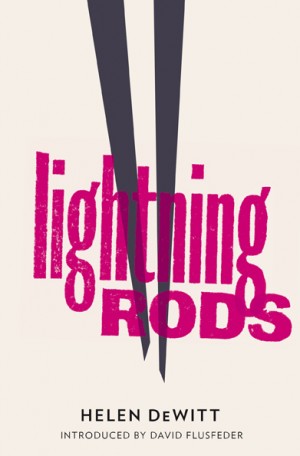
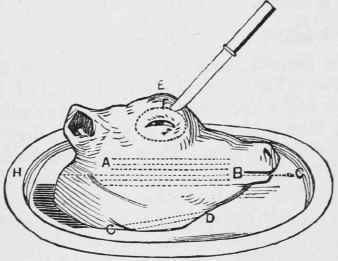








 Mark Blacklock